
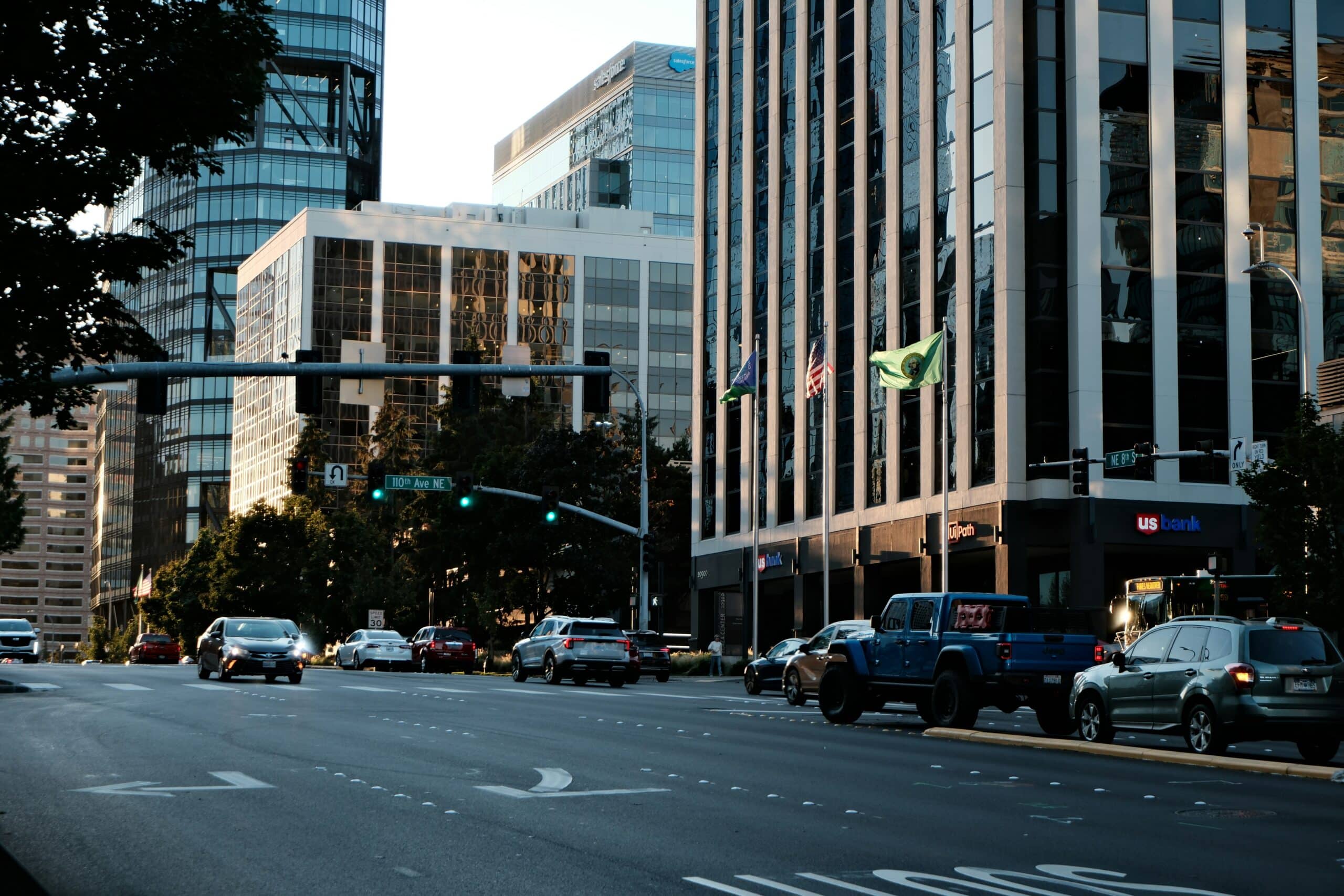
Bellevue City Council Votes 6-1 to Assume Transportation Benefit District
On Tuesday night, the Bellevue City Council voted 6-1 to assume authority over the Transportation Benefit District (TBD), with Councilmember Jared Nieuwenhuis casting the lone “no” vote.
The outcome made one thing clear: the majority of Council appears to support increasing taxes for transportation, specifically a combined sales tax and car tab increase. The discussion served less as an authentic policy debate and more as a foundation for councilmembers to air sympathy before moving forward with higher local taxes.
To be clear, last night’s vote did not levy a single new dollar in sales tax or car tab fees. The Council has merely set up the legal mechanism, which is required before they can tax us. There will be one more public hearing (Oct. 27) before a final vote (Nov. 3) to enact any new tax without a vote of the public.
That means residents still have time to push back against these non-voted tax hikes, and demand that any tax package be sent to voters and prioritize what is most important to our community. Is that road and safe sidewalk improvements? Or big ticket projects like the $266 million Grand Connection pedestrian/bike crossing? Or more bike projects?
Balancing Funding with Transportation Realities
Councilmember Jared Nieuwenhuis highlighted the gap between the recent transportation survey the city conducted, which reflects actual travel behavior, compared to staff priorities. He correctly pointed out that the survey showed that the top priorities for residents are maintaining aging roads, sidewalks and bridges, as well as improving driving travel times. Despite that, “there’s substantially more funding for bikes and pedestrians than vehicles.” In fact, under the highest tax scenario, there are 38 ped/bike projects, compared to 13 vehicular, and that does not include the $266 million dollar bike and walking lane that gets 11.5% of TBD revenue.
Councilmember Nieuwenhuis added that, “The vast majority of people who come into our city do so in a car…so that needs to weigh heavily” in funding decisions to ensure traffic keeps moving efficiently throughout the city.
Real Sympathy or Political Theater?
Some Councilmembers were eager to express sympathy for residents already facing high state and local tax pressure. Councilmember Claire Sumadiwirya acknowledged that while $77 per year per household sounds modest to some, “it’s not small.” She’s not wrong. If this sales tax is approved, Bellevue residents will pay among the highest combined sales tax rates in the nation. Car tabs, which are already very high for Bellevue residents, will climb another $20, and perhaps $40 or more in the next several years.
Councilmember Naren Briar agreed, noting that $70 or more is “a breaking point for some families.”
Councilmember Dave Hamilton took a different approach, claiming that, “the community wants [Council] to fund [the TBD] in this budget.” If that is true, why does he oppose allowing Bellevue residents to vote on this issue?
He cited a Bellevue Chamber poll to justify his position. The Chamber poll, and the city’s own transportation survey, both show that traffic relief and safer sidewalks are top priorities for residents. But Councilmember Hamilton overlooked two critical trends from that same Chamber poll. First, the support for raising taxes to pay for transportation has steadily declined over the past two years over every project category. Second, the share of Bellevue voters who feel city taxes are too high for the level of services provided jumped to 60%, a sharp increase over 2025.
Bellevue residents clearly value well-maintained roads and safe intersections, but tax fatigue has hit a tipping point. With 60% of voters saying taxes are too high, Council should prioritize existing revenue, cut lower priority projects and administrative bloat, and put the choice directly on the ballot.
Less Analysis, More Construction
Councilmember Vishal Bhargava zeroed in on a critical point that echoed feedback sent in by local neighbors and stakeholders, which is that the City must stop wasting tax dollars on redundant studies and actually build infrastructure. He called for a clear, stack-ranked priority list to ensure critical, failing intersections and safety projects get funding first, and that the money support physical construction rather than ongoing studies.
So, What’s Next?
With authority over the TBD now locked in, the Council will move to formally approve both a sales tax and car tab fee increase without a public vote. As Bellevue residents, we should step forward and demand the opportunity to vote on this tax package and project list. This will not dramatically delay projects 10 years or more, as some councilmembers and staff keep telling us. In fact, a vote could take place in a matter of months in February, or in November.
Share your thoughts with Council at Council@BellevueWA.gov, especially if you didn’t have a chance to write or show up.
And be sure to add Tuesday, October 27 to your calendar. That will be the final public hearing on the budget, where every person who signs up to testify gets a chance to be heard.